How to Use a Baby Sound Machine Safely: A Parent’s Complete Guide (2026)

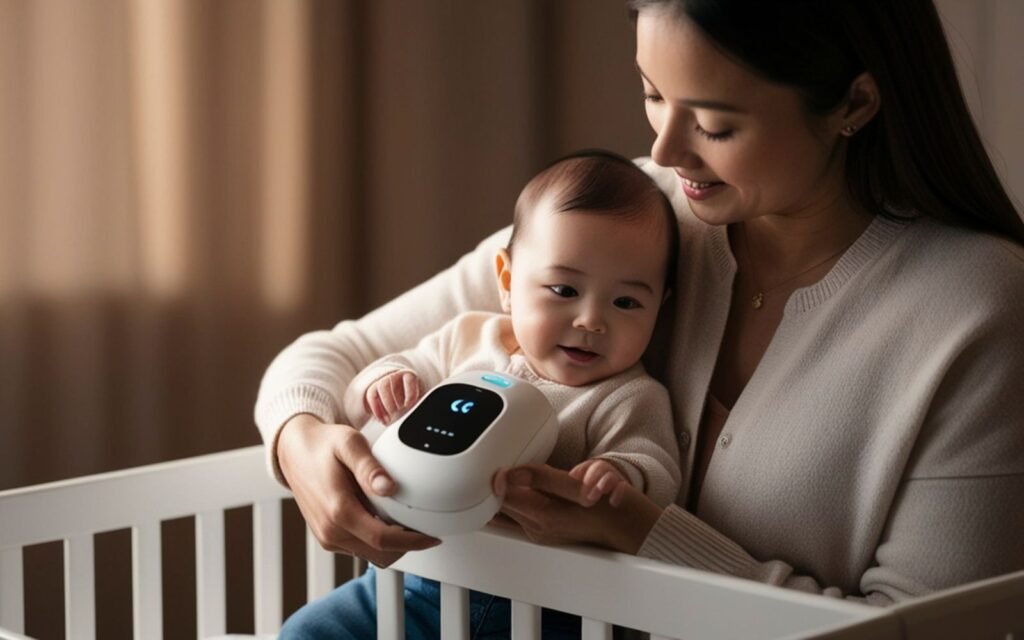
You’ve probably heard that white noise can work wonders for a fussy baby. A sound machine can help your little one drift off faster, sleep longer, and wake up less often at night. That sounds pretty great, right? But here’s the thing -a lot of parents aren’t sure how to use one correctly.
Use a Baby Sound Machine Safely by following the right volume, placement, and timing guidelines. A baby sound machine can help create a calming sleep environment, but using it correctly is essential to protect your baby’s hearing and support safe sleep. This guide explains everything parents need to know, including recommended volume levels, where to place the device, how long to use it, and common mistakes to avoid.
If the volume is too high or the machine is placed too close to the crib, it can cause more harm than good. The good news is that using a baby sound machine safely is simple once you know the basics. This guide walks you through everything -from the right volume level to the best placement -so you can feel fully confident every single night.
What Is a Baby Sound Machine?
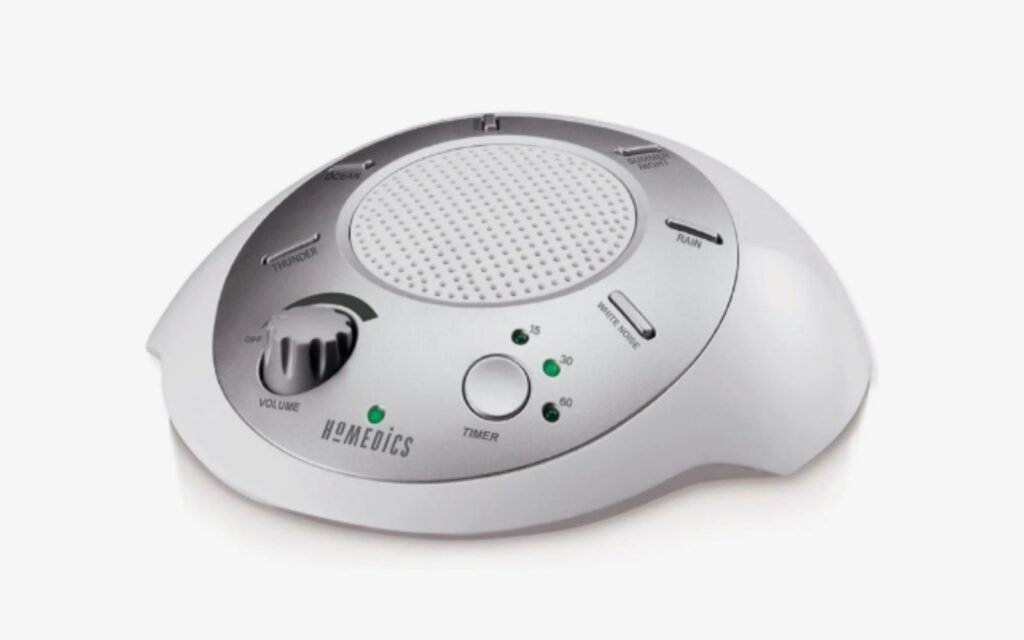
A baby sound machine is a small device that plays continuous, soothing sounds to help your baby relax and fall asleep. Most models offer a variety of sounds, including white noise, pink noise, brown noise, rain, ocean waves, and gentle lullabies. Some higher-end models even come with built-in nightlights or smartphone app controls.
These machines work by creating a steady layer of background sound that covers up sudden noises =like a ringing doorbell, passing traffic, or a barking dog. Since babies startle easily, that consistent sound barrier helps them stay in a deeper sleep for longer stretches.
Is a Baby Sound Machine Safe for Newborns?
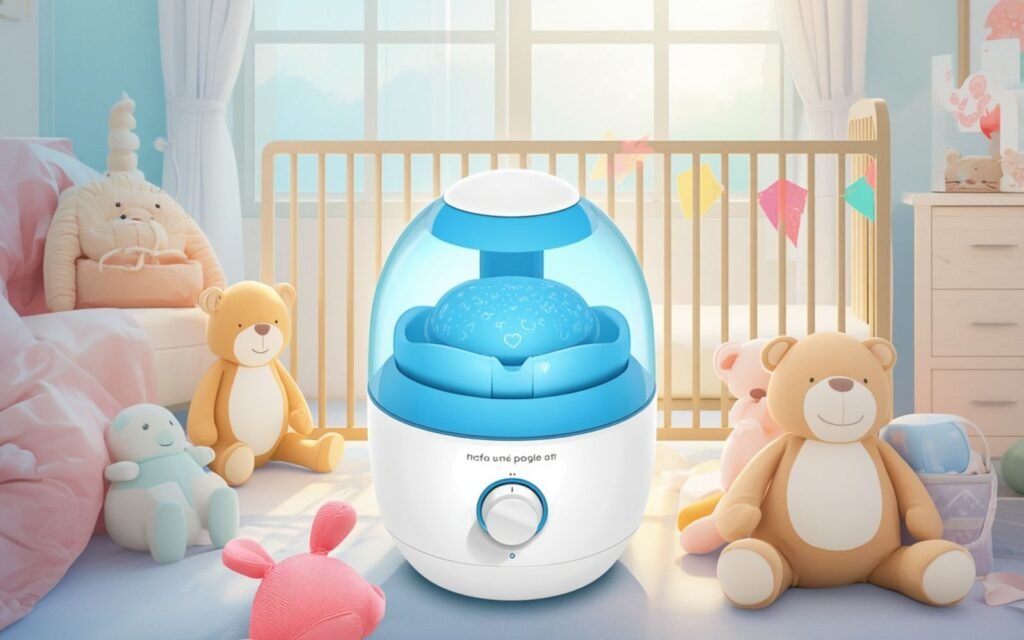
Yes -when used correctly, baby sound machines are considered safe even for newborns. The American Academy of Pediatrics (AAP) recommends keeping the volume at or below 50 decibels at crib level. That’s roughly the sound of a quiet, casual conversation in the same room.
The concern arises when parents place the machine too close or turn the volume up too high. Your newborn’s ears are still developing, and prolonged exposure to loud sound -even soothing white noise – can potentially affect their hearing. Thankfully, that’s very easy to prevent by following a few straightforward rules.
How to Use a Baby Sound Machine Safely
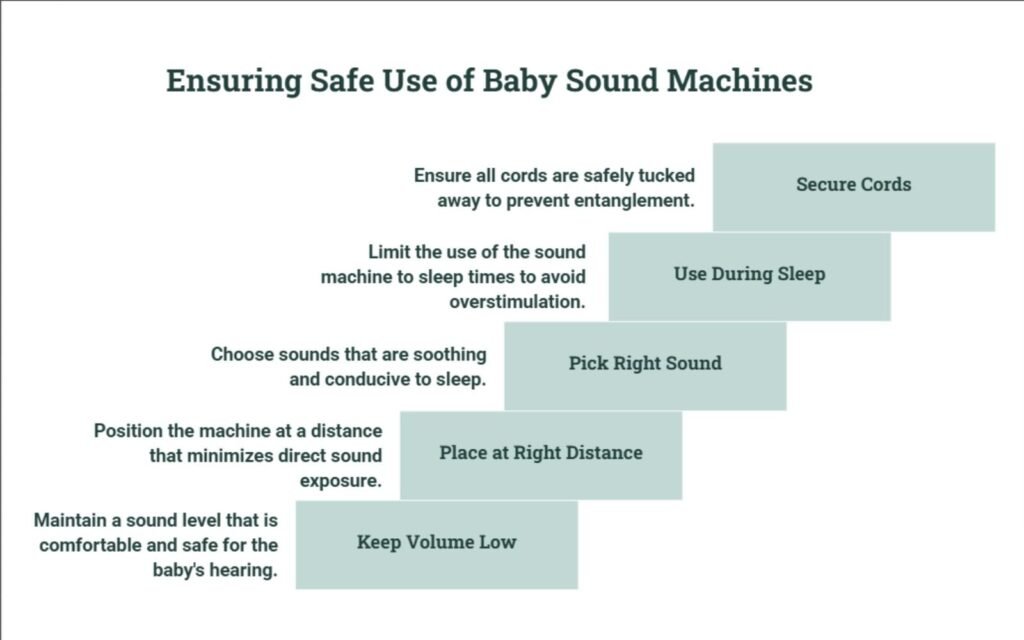
1. Keep the Volume Low
This is the single most important step. Always set your sound machine to a low or medium volume – never max it out. A simple test: stand next to the crib and speak in your normal voice. If you have to raise your voice just to be heard over the machine, it’s already too loud.
Aim for around 50–60 decibels at crib level. If your device has a built-in volume display or companion app, use it to monitor the output. No app? A free decibel meter on your smartphone works perfectly and takes about 10 seconds to check.
2. Place It at the Right Distance
Never put the sound machine directly inside the crib or right next to your baby’s head – even if it seems convenient. Distance is everything. Place the machine at least 6 to 7 feet away from the crib, ideally near a door or window.
That position does double duty: it keeps the sound at a safe level for your baby and blocks outside noise from sneaking in. It’s a small change that makes a big difference.
3. Pick the Right Type of Sound
Not all sounds are created equal. Deep, steady options like brown noise or white noise tend to work best for most babies. These sounds closely mimic the constant hum your baby heard in the womb, making them naturally calming and familiar.
Stay away from sounds that spike or shift in pitch. Those sudden changes can startle your baby awake instead of keeping them asleep. If you’re not sure where to start, try white noise or a steady fan sound – both are popular choices among parents for good reason.
4. Use It Only During Sleep Times
You don’t need to run the sound machine all day long. Turning it on only during naps and nighttime sleep actually works better. Over time, your baby will begin to associate that sound with sleep, which naturally strengthens their bedtime routine.
Running it around the clock can also make it harder to wean your child off the machine later on. Keep it as a sleep-only tool, and you’ll have a much easier time when that day comes.
5. Secure All Cords and Cables
Sound safety goes beyond just the noise. If your machine uses a power cord, make sure it’s tucked completely out of your baby’s reach. Use cord clips or adhesive cable guides to run it along the wall and behind furniture. Dangling cords are a strangulation hazard – it’s not worth the risk.
If you’d rather skip the cord concern entirely, look for a battery-powered or USB-rechargeable model. They’re just as effective and give you a lot more flexibility in placement.
Signs the Sound Machine May Be Too Loud
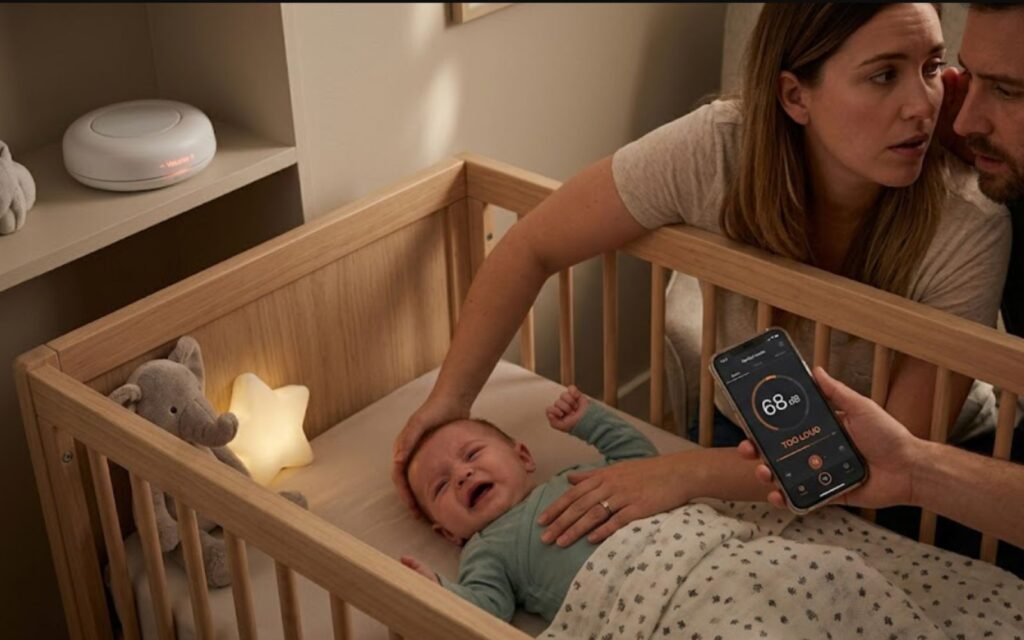
Even after following the setup tips above, it’s smart to keep an eye on how your baby responds. Here are some signs the volume might still be too high:
- Your baby seems restless or startles frequently during sleep
- You need to raise your voice to talk over the machine
- Your baby wakes up seeming more irritable than usual
- A decibel meter app shows readings above 65 dB near the crib
- Your baby turns their head or appears bothered by the sound
If you notice any of these, lower the volume right away. Trust your instincts — you know your baby better than any guideline.
When Should You Stop Using a Baby Sound Machine?
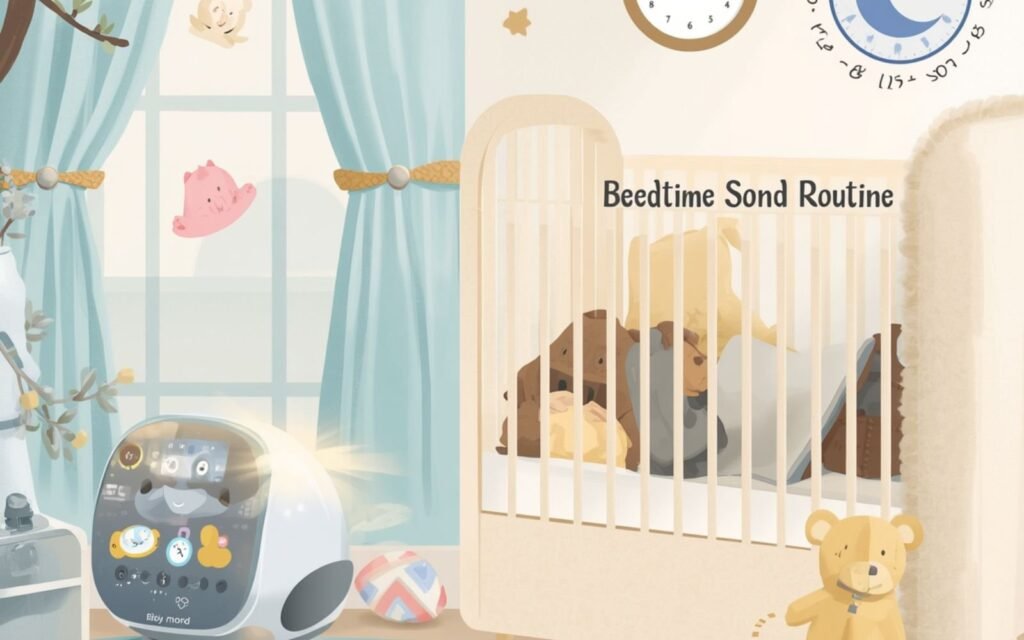
There’s no hard rule on timing, but many parents begin gently weaning their babies off the sound machine somewhere between 12 and 18 months. By that age, most little ones can sleep more consistently without needing that background hum.
Start by lowering the volume slightly every few days. Then try using it only at night and skipping naps. Once your child sleeps well through naps without it, you can phase it out completely at your own pace. There’s no rush – just follow your baby’s lead.
Quick Tips at a Glance – Use a Baby Sound Machine Safely
- Keep volume at or below 50–60 dB at crib level
- Always place the machine at least 6–7 feet away from the crib
- Use steady, deep sounds like white noise or brown noise
- Run it only during sleep — not throughout the entire day
- Secure all power cords safely away from your baby’s reach
- Start weaning around 12–18 months at a gradual, comfortable pace
Final Thoughts
A baby sound machine can genuinely be a game-changer for your whole family’s sleep – as long as you use it the right way. Keep the volume within safe limits, position the machine at a proper distance, and build it into a consistent sleep routine. When you follow these simple guidelines, your baby gets all the soothing benefits of white noise without any of the risks.
If you found this guide helpful, you might also want to check out our article on baby walker safety tips or explore our full Baby Safety category for more trusted parenting guides.
Frequently Asked Questions
Can I leave a baby sound machine on all night?
Yes, running a sound machine throughout the night is perfectly fine as long as you keep the volume at a safe level – around 50–60 decibels at crib level. Many parents use it all night long without any issues.
How close should a sound machine be to the crib?
Keep the sound machine at least 6 to 7 feet away from the crib. Never place it inside the crib or directly next to your baby’s head – distance protects your baby’s developing ears.
What type of white noise is safest for babies?
Brown noise and white noise are both great, safe choices. They produce a steady, deep hum similar to what babies hear in the womb. Avoid sounds with sudden changes in pitch or volume.
At what age can I start using a baby sound machine?
Baby sound machines are generally safe to use from birth. Just be sure to follow the volume and placement guidelines from day one to protect your newborn’s hearing from the very start.
How do I wean my baby off a sound machine?
Lower the volume gradually over several weeks. Then try removing it during nap times first. Once naps go smoothly without it, you can phase it out at night too. Move at your baby’s pace – there’s absolutely no rush.