Rainy Day Activities for Toddlers: 12 Easy Indoor Ideas

8 mins read
The best rainy day activities for toddlers are simple, hands-on games that use things you already own: a cardboard box, a laundry basket, a few pots and a roll of tape. I have spent more than a few grey afternoons trapped indoors with a restless toddler, and what finally worked was never the expensive toy. It was giving my little one a safe, interesting job to do while I stayed close.
Below you will find twelve ideas grouped by energy level, plus the safety points I check before every activity. Every idea is designed for adult supervision and works for roughly ages one to three, so adjust to what your child can do right now.
Key Takeaways
- The easiest rainy day activities for toddlers use household items, so you do not need to buy anything.
- The American Academy of Pediatrics (AAP) describes play as essential to healthy development, supporting language, motor skills and emotional regulation.
- Rotate between active, calm and messy activities so your toddler does not tire of any one game.
- Always supervise closely and remove small parts, balloons and anything that could be a choking hazard.
- Talk with your child’s pediatrician about any development or safety questions rather than relying on a blog post.
Why Does Play Matter So Much on Indoor Days?
It is easy to feel guilty when the day turns into “just playing” at home. I used to worry that a wet afternoon meant my child was missing out. The AAP’s HealthyChildren.org says the opposite: play improves children’s abilities to plan, organize, get along with others and regulate emotions.
The same AAP article on the power of play notes that the time children get to play has been declining for decades, and that pediatricians may even write a “prescription for play” at well-child visits through age two. So a rainy afternoon of blocks and boxes is not wasted time. It is exactly the kind of play the AAP encourages.
The AAP also describes play as a way to build safe, stable and nurturing relationships with caregivers. That is the part I love most. Your attention matters more than any gadget.
What Are the Best High-Energy Rainy Day Activities for Toddlers?
Toddlers have energy to burn, and rain does not change that. These ideas let them move safely indoors.
1. Pillow Mountain Climb
Stack couch cushions and pillows on the floor and let your toddler crawl, climb and tumble over them. Keep the pile low, stay right beside your child, and clear hard furniture corners from the area. According to the CDC’s 18-month milestones, many children this age can climb on and off a couch or chair without help, so this taps into a skill they are already practicing.
2. Indoor Obstacle Course
Line up a tunnel made from a blanket draped over chairs, a strip of painter’s tape to walk along, and a laundry basket to drop toys into. I narrate it like a game show, which my toddler loves. Keep each station simple so a one-step direction is enough. The CDC lists following one-step directions at around 18 months, so “put the ball in the basket” is great practice.
3. Dance Party and Freeze
Put on a few songs and dance. Pause the music and “freeze” together. It burns energy and builds listening skills without a single prop.
4. Balloon-Free Bubble or Scarf Toss
Skip balloons, which can be a choking risk if they pop. Toss a lightweight scarf in the air and watch it float down, or blow bubbles for your toddler to chase. Supervise closely and keep bubble solution away from mouths.
Which Calm Rainy Day Activities Help Toddlers Settle?
After the wiggles, most toddlers need something quieter. These ideas help the whole house exhale.
5. Cardboard Box Fort
A large box becomes a car, a house or a cave. Cut a doorway for your toddler, smooth any rough edges, and add a flashlight (battery compartment secured) for reading inside. My child could spend an hour in a box while the new toy sat untouched.
6. Picture Book Picnic
Spread a blanket, bring a few snacks that are safe for your child’s age and stage, and read together. The CDC milestones list looking at pages in a book with you as a typical 18-month skill, so this is both cozy and developmentally on target.
7. Sock Matching and Sorting
Dump a basket of clean socks and let your toddler pair them or toss them into a bin by color. It sounds boring to adults. Toddlers find it fascinating, and it turns laundry into a shared chore.
8. Quiet Sticker or Scribble Time
Tape a big sheet of paper to the floor and offer chunky, non-toxic crayons. The CDC lists scribbling among the movement milestones around 18 months. Stay close so crayons stay out of mouths.
What Messy Sensory Ideas Work for a Rainy Day?
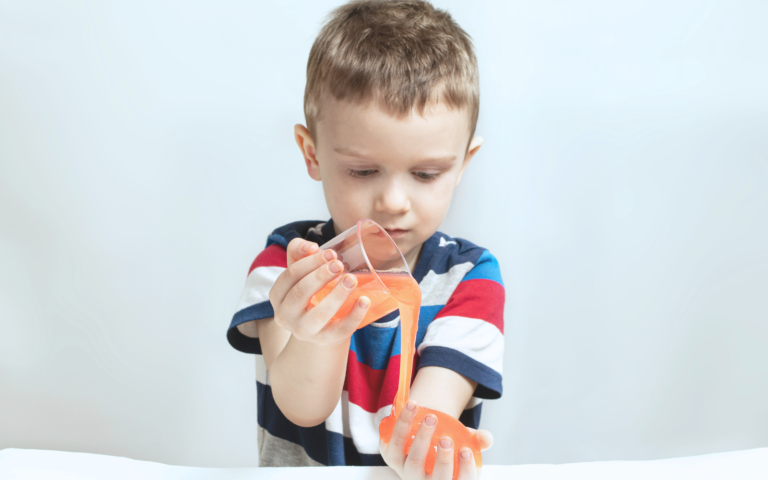
Sensory play can feel like a lot of cleanup, but a few tricks keep it manageable. A bath towel under a high chair or a shallow baking tray keeps most of the mess contained. For more ideas, see our guide to sensory play activities for babies and toddlers.
9. Water Play at the Kitchen Table
Fill a shallow tub with a little water, a few cups and a sponge. Never leave a toddler alone with water, even a small amount. Our post on water safety for toddlers explains why constant, hands-on supervision matters.
10. Pots, Pans and Wooden Spoon Band
A pot becomes a drum and a spoon becomes a drumstick. It is loud, joyful and free. Put on earplugs if you need them. I certainly have.
11. Pretend Kitchen Play
Give your toddler plastic containers and a cloth to wipe the table. The CDC notes that copying you doing chores, like sweeping, is a common cognitive milestone around 18 months. For more ideas along these lines, read our guide to pretend play for toddlers.
12. Treasure Basket
Gather safe, large household objects like a wooden spoon, a silicone spatula and a soft brush into a basket. Let your toddler explore each one. Check every item against the rule below before it goes in.
How Do I Keep Indoor Play Safe?
Safety comes first, especially when we are tired and the day feels long. The U.S. Consumer Product Safety Commission (CPSC) enforces a small parts ban for toys and children’s products intended for children under three, because small objects can be a choking hazard for this age group.
Household items do not go through that same testing, so I do a quick sweep before play: no loose small pieces, no balloons, no button batteries or magnets within reach, and no cords. If something could fit in your child’s mouth, leave it out of the basket.
Stay within arm’s reach during water, sensory and climbing activities. A toddler can get into trouble faster than any of us expect.
What About Screens on a Rainy Day?
I will be honest: there are rainy days when a show feels like survival. If you want screen-free options, the activities above are ready to go. For the AAP’s guidance on screens at this age, see our post on screen time for babies, and for building longer stretches of solo play, try encouraging independent play.
Summary
Rainy day activities for toddlers do not have to be complicated. Mix high-energy games like pillow mountains with calm ones like picture book picnics, add a little sensory play, and keep safety front and center. The AAP says play supports language, motor skills and emotional regulation, so this time is truly well spent.
Every child develops at their own pace. If you have questions about your toddler’s development or safety at home, please check with your pediatrician.
Frequently Asked Questions
How long should a toddler play at one activity?
There is no set number. Toddlers often switch activities quickly, and that is normal. Follow your child’s interest, and if they move on after a few minutes, simply offer the next idea.
What if my toddler gets bored of everything?
Rotate items instead of buying new ones. Put a few things away and bring them back later. A familiar item often feels brand new after a week out of sight.
Are these activities okay for a one-year-old?
Many are, with adjustments and very close supervision. Skip anything with small pieces, and choose large, safe objects. Ask your pediatrician if you are unsure what suits your child’s stage.
Should I worry if my toddler does not seem interested in play?
Every child has their own temperament. The CDC encourages parents who have concerns about milestones or lost skills to talk to their child’s doctor and ask about developmental screening, rather than waiting.
Is it okay to let my toddler play alone for a while?
Short stretches of independent play in a safe, supervised space can be fine. Stay nearby and within earshot, and keep activities simple.
This article is for general information only and is not medical advice. Please consult your pediatrician about your child’s health, development and safety. Milestone information referenced from the CDC’s 18-month milestones.