How to Bathe a Newborn: A Safe Step-by-Step Guide

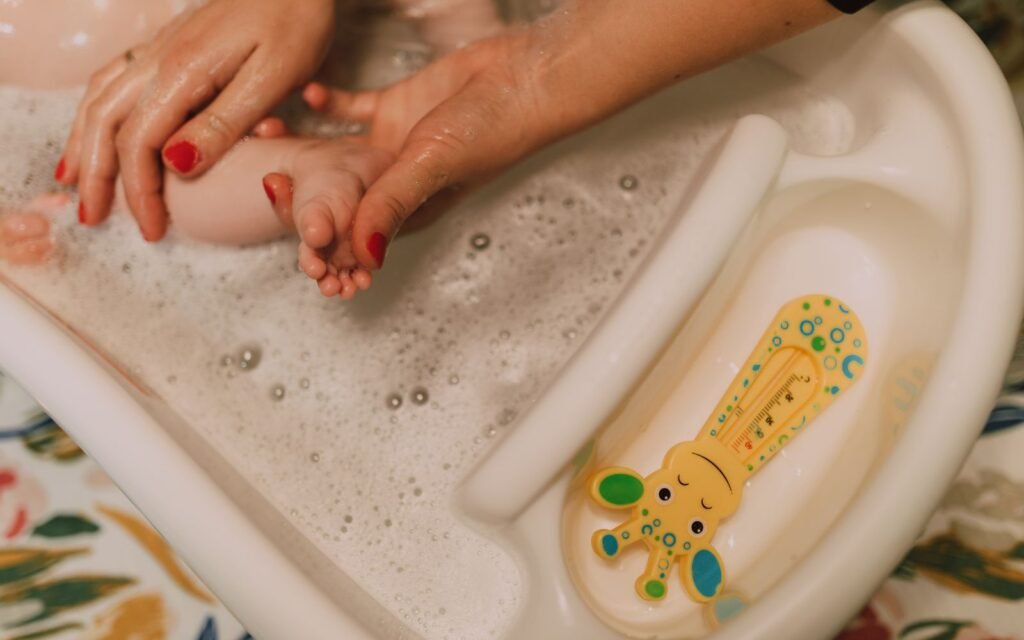
If you want to know how to bathe a newborn safely, here is the short answer: give sponge baths until the umbilical cord stump falls off, keep the water around 100°F (38°C), gather everything within arm’s reach first, and never step away from your baby for even a second. Those few habits cover the vast majority of what new parents worry about. The World Health Organization even recommends delaying a healthy baby’s very first bath until at least 24 hours after birth, so there is no rush to get this perfect on day one.
I remember hovering over the bathroom sink with my first child, second-guessing every step. The good news is that bathing a baby is far more forgiving than it feels in the moment. Let me walk you through it the way I wish someone had walked me through it.
Key Takeaways – How to Bathe a Newborn
- How to bathe a newborn starts with sponge baths until the cord stump falls off, usually by one to two weeks of age.
- Newborns only need a bath about three times a week — more often can dry out their skin.
- Keep bath water around 100°F (38°C) and set your water heater no higher than 120°F (49°C) to prevent scald burns.
- Never leave a baby alone in water for even a moment; infants can drown in as little as one to two inches.
- Gather every supply before you start, and always check the water with your wrist or elbow first.
When Should You Give a Newborn Their First Bath?

There is no medal for bathing early. The World Health Organization recommends waiting at least 24 hours after birth for a healthy newborn’s first bath, or a minimum of six hours if a full day isn’t possible for family or cultural reasons. Delaying helps your baby hold their body temperature, supports steady blood sugar, and protects skin-to-skin bonding and early breastfeeding.
Part of the reason is vernix — the waxy white coating on a newborn’s skin. The American Academy of Pediatrics notes that vernix acts as a natural moisturizer with possible antibacterial properties, so it’s best to leave it on the skin for a while rather than scrubbing it off. One review even linked a delayed first bath to a 166% jump in in-hospital breastfeeding success, a reminder that “later” is often “better” here.
Sponge Baths Come First
Until the umbilical cord stump dries and falls off, stick with sponge baths. The AAP advises sponge bathing only until the stump comes off, which usually happens by about one to two weeks of age. A sponge bath is just like a regular bath except your baby never goes into the water.
How to Give a Sponge Bath
Lay your baby on a flat, padded surface — a changing table, a bed, or a thick towel on the floor. Keep one hand on them at all times. Dip a soft washcloth in warm water, wring it out, and wipe gently from the cleanest areas to the messiest: eyes and face first, then the body, then the diaper area last. Wash only the parts you’re cleaning and keep the rest covered so your baby stays warm.
Pat, don’t rub, and pay attention to the little creases in the neck, behind the ears, and under the arms where milk and lint like to hide. If you’d like a deeper routine for keeping delicate skin healthy between baths, our guide to newborn skin care basics pairs well with this one.
How Often Does a Newborn Really Need a Bath?
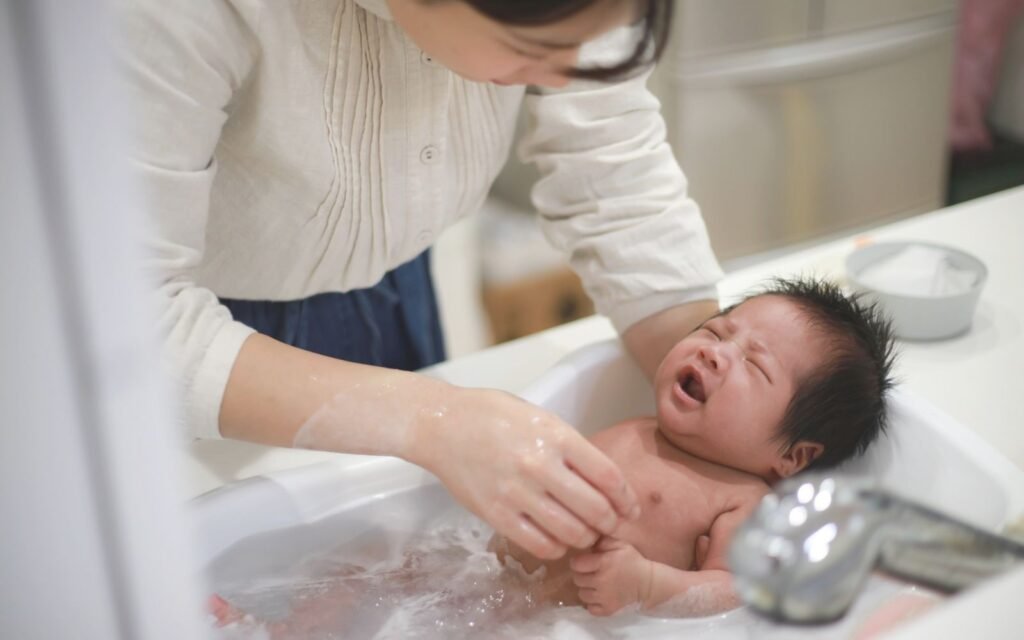
Less often than you’d think. According to HealthyChildren.org, three baths a week during your baby’s first year is plenty — newborns rarely sweat or get dirty enough to need more, and frequent bathing can dry out their sensitive skin. Between baths, a quick wipe of the face, neck folds, and diaper area keeps them fresh.
Once you fall into a rhythm, bath time can become a lovely wind-down cue. Many families fold it into the evening routine right before feeding and sleep. If you’re building that kind of predictable flow, you may find our newborn bedtime routine tips helpful for stringing the pieces together.
Getting the Water Temperature Right
Aim for bath water around 100°F (38°C) — comfortably warm, never hot. Always test it with the inside of your wrist or your elbow before your baby goes in, since your hands tolerate heat better than their skin does. Fill the basin with just two to three inches of water for a small baby.
Scald prevention matters more than most parents realize. The U.S. Consumer Product Safety Commission recommends setting your home water heater no higher than 120°F (49°C), because water hotter than that can burn a child’s thin skin in seconds. Turning that thermostat down is a one-time fix that protects your child long after the newborn stage. For anything that looks like a burn, a rash, or skin that won’t settle, check with your pediatrician.
Water Safety: The Rule You Never Bend
This is the part I never soften for anyone. Never leave your baby alone in or near water — not to grab a towel, not to answer the door, not for a single second. Infants can drown silently in as little as one to two inches of water because they lack the neck and muscle control to lift their faces clear.
The stakes are real: the CDC reports that drowning is the leading cause of unintentional injury death for children ages 1 to 4. If you forgot something, wrap your baby in a towel and take them with you. Keep a hand on your baby the entire time, and skip bath seats and rings as a substitute for your hands — they are conveniences, not safety devices.
How to Bathe a Newborn in a Tub: Step by Step
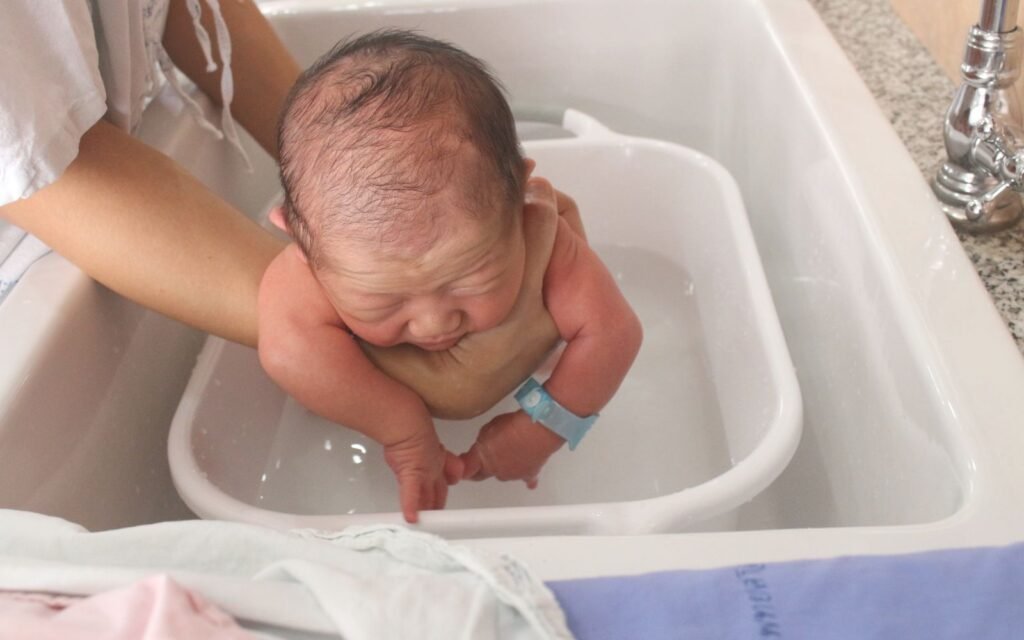
Once the cord stump is gone and your pediatrician gives the go-ahead, you can move to a small baby tub. Here’s the routine I settled into:
- Gather everything first: tub, warm water, washcloth, a cup for rinsing, mild baby wash, a hooded towel, and a clean diaper and clothes.
- Fill the tub with two to three inches of 100°F water and test it.
- Undress your baby and lower them in feet-first, supporting the head and neck with your forearm the whole time.
- Wash from top to bottom and cleanest to dirtiest, using a cupped hand to keep water off the face.
- Rinse gently, lift them out onto the towel, and wrap them up snugly to lock in warmth.
Keep the room warm and the whole bath short — five to ten minutes is plenty. Mayo Clinic advises supporting your newborn’s head and pouring warm water over them regularly so they don’t get cold during the bath. A chilled baby will let you know they’re unhappy, and a warm room prevents most of that fuss.
Summary
Learning how to bathe a newborn comes down to a handful of calm, repeatable habits: wait for that first bath, start with sponge baths until the cord falls off, bathe about three times a week, keep water near 100°F with the heater capped at 120°F, and never take your hands or your eyes off your baby around water. Do those things and bath time stops being stressful and starts being one of the sweeter parts of your day. When in doubt about your baby’s skin, the cord, or anything that feels off, your pediatrician is always the right call.
Frequently Asked Questions
Can I bathe my newborn before the umbilical cord falls off?
Stick to sponge baths until the stump comes off, which the American Academy of Pediatrics says usually happens by about one to two weeks. Keeping the area dry helps it heal and drop off on its own. Once it’s gone and healed, you can move to a small tub.
What water temperature is safe for a newborn bath?
Aim for about 100°F (38°C) and always test it on your wrist or elbow first. To prevent scalds, the Consumer Product Safety Commission recommends keeping your water heater at or below 120°F (49°C), since hotter water can burn a child’s skin within seconds.
How often should I bathe my newborn?
About three times a week is enough during the first year, according to HealthyChildren.org. Newborns don’t get very dirty, and over-bathing can dry out their skin. Wipe the face and diaper area between baths to keep them clean and comfortable.
Is it safe to use a bath seat so I can step away for a moment?
No. Bath seats and rings are conveniences, not safety devices, and are never a substitute for your hands. Because babies can drown in one to two inches of water in seconds, you must keep your baby within arm’s reach and never leave them alone in the bath, even briefly.
My baby cries during every bath — is something wrong?
Crying is common and usually about feeling cold or startled, not pain. Keep the room warm, pour warm water over your baby’s body throughout the bath, work quickly, and hold them securely. If crying seems tied to discomfort, a rash, or the cord area, check with your pediatrician for reassurance.
This article is for general information and is not a substitute for medical advice. Always consult your pediatrician about your baby’s health, skin, and care.
Trusted sources: American Academy of Pediatrics — Bathing Your Baby, U.S. Consumer Product Safety Commission — Tap Water Scalds, CDC — Drowning Facts, World Health Organization — Caring for Newborns, and Mayo Clinic — Baby Bath Basics.







2 Comments