How to Relieve Baby Congestion Safely: A Gentle Guide


The safest way to relieve baby congestion is with simple, medicine-free steps that pediatricians endorse: thin the mucus with saline drops, clear it gently with suction, add moisture to the air with a cool-mist humidifier, and keep your baby comfortable and well-fed while the cold runs its course. As a parent who has spent more than a few 2 a.m. hours listening to a snuffly newborn, I know how nerve-wracking that congested little nose can feel. The good news is that most stuffiness is harmless and clears on its own, and the American Academy of Pediatrics (AAP) recommends saline drops, bulb suction, and a cool-mist humidifier as the core home approach for a baby’s cold. In their first two years alone, most children have about eight to ten colds, according to HealthyChildren.org, so a stuffy nose is one of the most common things we deal with as new parents.
Below, I’ll walk you through exactly what I do, what to avoid, and the specific warning signs that mean it’s time to call your pediatrician. This article is informational and never a substitute for medical advice, so please talk with your child’s doctor about anything health-related.
Key Takeaways – How to Relieve Baby Congestion Safely
- To relieve baby congestion safely, use saline drops, gentle bulb suction, and a cool-mist humidifier — the trio the AAP recommends for a baby’s cold.
- Never give over-the-counter cough and cold medicines to babies. The FDA does not recommend them for children under 2, and the AAP advises against them for any child under 4.
- Babies breathe mainly through their noses, so congestion can make feeding and sleeping harder; keep feeds small and frequent to prevent dehydration.
- Call your pediatrician right away for any baby 3 months or younger with a rectal temperature of 100.4°F (38°C) or higher.
- Seek urgent care for fast breathing, flaring nostrils, grunting, chest caving in, or a bluish tint around the lips.
What Causes a Stuffy Nose in Babies?
Most baby congestion comes from the common cold, a viral infection of the upper airway. Young children average many more colds than adults because their immune systems are still meeting each virus for the first time, and HealthyChildren.org notes most children have roughly eight to ten colds in their first two years.
Congestion can also come from dry indoor air, irritants like smoke, or normal newborn stuffiness in the first weeks of life. Because babies are natural nose-breathers, even a little mucus feels like a big deal to them. Cleveland Clinic explains that when nasal cavities are congested, babies can’t breathe well through the nose and often have trouble eating, which can lead to poor feeding, dehydration, and disrupted sleep. That’s why clearing the nose isn’t just about comfort — it helps your baby eat and rest.
How to Relieve Baby Congestion Safely at Home

Here is the step-by-step routine I rely on, drawn from AAP guidance. HealthyChildren.org’s cold-care advice centers on three tools — saline drops, suction, and humidified air — none of which involve medication.
Start with saline drops
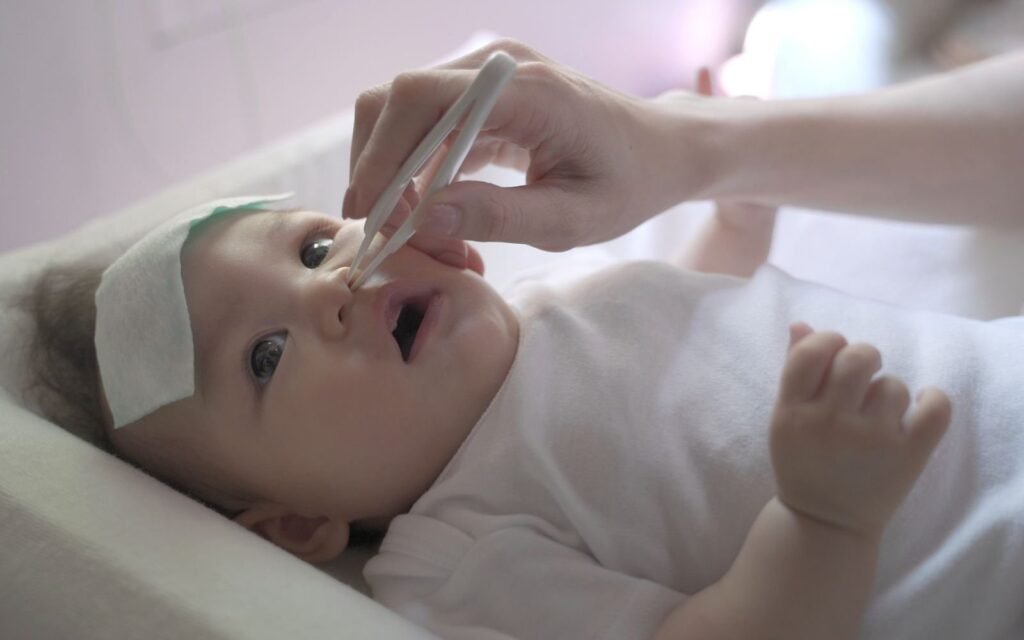
Saline (saltwater) drops thin sticky mucus so it’s easier to remove. The AAP advises using saline nose drops and cautions parents never to use nonprescription nose drops that contain any medicine. I place one or two drops in each nostril, wait about 30 to 60 seconds, then move on to suction. Saline is gentle enough to use several times a day, especially before feeds and naps.
Clear the nose with gentle suction
After the saline loosens things up, a bulb syringe or baby nasal aspirator does the rest. HealthyChildren.org describes squeezing the bulb first, then gently placing the tip in one nostril and slowly releasing so gentle suction draws the mucus out — a method that works best for babies younger than six months. Go slowly and don’t over-suction, which can irritate delicate nasal tissue. Clean the bulb thoroughly after each use.
Add moisture with a cool-mist humidifier
Dry air makes congestion worse, so the AAP recommends running a cool-mist humidifier in your baby’s room to moisten the air and help clear nasal passages. Cool mist is preferred over warm mist for safety around little ones. Clean the unit regularly to prevent mold and bacteria. If you’re weighing options, our guide on why babies need a humidifier and our overview of whether humidifiers are safe for babies both walk through the details.
Keep feeds and sleep comfortable
Congestion often peaks at night. HealthyChildren.org advises clearing the nose with saline and suction before feeding and before bed so your baby can eat and sleep more easily. Offer smaller, more frequent feeds to keep your baby hydrated. Always follow safe-sleep rules: place your baby on their back on a firm, flat surface with nothing in the crib. Never prop your baby up or use an inclined sleeper to ease congestion, as inclined positioners are not safe for infant sleep.
What to Avoid When Relieving Baby Congestion
The single most important rule: skip the medicine cabinet. The FDA does not recommend over-the-counter cough and cold medicines for children younger than 2 because they can cause serious, potentially life-threatening side effects, and reported problems have included convulsions, rapid heart rate, and even death. The AAP goes further, advising against these products for any child under 4. Manufacturers voluntarily label them “Do not use in children under 4 years of age.”
Also avoid medicated (decongestant) nose sprays, honey (never before age 1), and vapor rubs marketed for babies unless your pediatrician specifically approves them. Teething can overlap with cold season and add to the fuss; if that’s part of your picture, see our gentle tips for soothing teething pain in babies. When in doubt about any product or remedy, ask your child’s doctor first.
When to Call the Pediatrician

Most colds are mild and clear within one to two weeks, but some situations need prompt medical attention. HealthyChildren.org is emphatic on one point: if your baby is 3 months of age or younger and has a rectal temperature of 100.4°F (38°C) or higher, call your pediatrician immediately — even if there are no other symptoms.
Congestion sometimes signals a lower-airway infection like bronchiolitis, often caused by RSV. The CDC and Cleveland Clinic warn parents to watch for trouble breathing: fast breathing, nostrils flaring, grunting sounds, the chest caving in with each breath, or a bluish tint around the lips or fingertips. Any of these — or signs of dehydration such as fewer wet diapers, or a baby too congested to feed — warrants urgent care. Trust your instincts; you know your baby best, and it’s always okay to call your pediatrician for reassurance.
Summary
To relieve baby congestion the safe way, reach for saline drops, gentle suction, and a cool-mist humidifier rather than any medication, and time your nose-clearing before feeds and sleep. Keep your baby hydrated with small, frequent feeds, stick to safe-sleep basics, and skip over-the-counter cough and cold products entirely for little ones. Most stuffiness passes on its own, but a fever of 100.4°F or higher in a baby 3 months or younger, or any breathing trouble, means it’s time to call your pediatrician right away. With a calm routine and a close eye on the warning signs, you can help your baby breathe easier through cold season.
Frequently Asked Questions
How can I relieve my baby’s congestion at night?
Before bed, put a drop or two of saline in each nostril, wait about a minute, then use gentle bulb suction to clear the mucus. Run a cool-mist humidifier in the room and keep your baby on their back on a firm, flat crib surface. HealthyChildren.org recommends clearing the nose before sleep so your baby rests more comfortably. Never prop your baby up or use an inclined sleeper.
Can I give my baby cold medicine for a stuffy nose?
No. The FDA does not recommend over-the-counter cough and cold medicines for children under 2, and the AAP advises against them for any child under 4 because of serious safety risks. Saline drops, suction, and a humidifier are the recommended alternatives. Always check with your pediatrician before giving your baby any medication.
How many colds are normal for a baby?
Quite a few, actually. According to HealthyChildren.org, most children have about eight to ten colds in their first two years as their immune systems build up. Frequent stuffiness is usually normal, but persistent symptoms or high fever should be discussed with your child’s doctor.
When should baby congestion worry me?
Call your pediatrician immediately if a baby 3 months or younger has a rectal temperature of 100.4°F (38°C) or higher. Seek urgent care for fast breathing, flaring nostrils, grunting, the chest caving in, a bluish tint around the lips, poor feeding, or signs of dehydration. These can indicate RSV or bronchiolitis, which the CDC and Cleveland Clinic flag as needing prompt evaluation.
How long does baby congestion usually last?
A typical cold lasts about one to two weeks, with congestion often worst in the first few days. If symptoms drag on beyond two weeks, worsen after starting to improve, or come with a high fever or breathing trouble, contact your pediatrician for guidance.
This article is for general information only and is not medical advice. Always consult your pediatrician about your baby’s health.