Traveling With Baby Formula and Breast Milk: A Guide

11 mins read
Traveling with baby formula and breast milk stressed me out far more than the actual trip the first time we flew with our daughter. Here is the short answer I wish someone had given me: in the United States, formula and breast milk are exempt from the airport liquids limit of 3.4 ounces, prepared formula should be used within 2 hours of mixing (1 hour once feeding begins), and freshly expressed breast milk stays safe in an insulated cooler bag with frozen ice packs for up to 24 hours, according to the CDC. Once I understood those rules, feeding my baby away from home stopped feeling risky and started feeling routine.
Key Takeaways
- Traveling with baby formula and breast milk is fully allowed through United States airport security — both are exempt from the 3.4-ounce liquids rule, per CDC and TSA guidance.
- The CDC advises using prepared formula within 2 hours of preparation and within 1 hour of the start of a feeding; anything left in the bottle afterward gets thrown out.
- Freshly expressed breast milk can travel in an insulated cooler with frozen ice packs for up to 24 hours, per the CDC.
- Powdered formula plus a bottle of safe water is the most packable option; sterile ready-to-feed formula is the safest choice when clean water or refrigeration is uncertain.
- Never store formula containers in a hot car — the CDC says unopened containers belong in a cool, dry, indoor place, not in vehicles.
- Babies under 2 months, premature babies, and babies with weakened immune systems need extra preparation precautions — talk with your pediatrician before the trip.
Traveling With Baby Formula: Pick Your Format Before You Pack
The single best decision I make before any trip is choosing which form of formula to bring. Each format trades convenience against how careful you need to be, and the right choice depends on where you are going.
Powdered formula
Powder is light, does not need refrigeration before mixing, and lets me make exactly the amount my baby will drink. I pre-measure scoops into a clean, dry dispenser at home and carry water separately, then mix a fresh bottle right before each feeding. The CDC’s infant formula preparation and storage guidance stresses measuring the water first and then adding powder, because too little water can strain a baby’s kidneys and digestive system while too much dilutes the nutrition.
Ready-to-feed formula
Ready-to-feed costs more and weighs more, but it is sterile and needs no water at all. When I cannot be sure about safe water, refrigeration, or a clean place to prepare bottles — long travel days, remote destinations, delays — small ready-to-feed bottles are what I reach for. This mirrors the CDC’s own emergency advice: when water safety is in question, bottled water or ready-to-feed formula is the answer.
The safe-water question
Most of the time, safe tap water mixed per the manufacturer’s instructions is fine. When I am unsure about local tap water, I buy sealed bottled water. And for babies younger than 2 months, born prematurely, or with weakened immune systems, the CDC recommends mixing powder with water that has been boiled and then cooled for about 5 minutes — still very hot, around 158°F (70°C) — to kill rare but dangerous germs like Cronobacter, then cooling the bottle fully and wrist-testing it before feeding. That is a lot to manage in an airport, which is exactly why many parents of very young babies choose sterile ready-to-feed for travel days.
The Formula Timing Rules I Never Break
Away from home it is tempting to stretch a bottle a little longer. I do not, because the numbers are not negotiable. The CDC says to use prepared formula within 2 hours of preparation and within 1 hour from when a feeding begins. If a prepared bottle has not been started within 2 hours, it goes straight into a refrigerator and must be used within 24 hours.
Whatever my daughter leaves in the bottle gets dumped, every time — the mix of formula and saliva grows bacteria. Two more travel-specific rules from the same guidance: never warm a bottle in a hotel microwave (uneven hot spots can burn a baby’s mouth; run it under warm water instead), and never leave formula containers in the car. Unopened containers belong in a cool, dry, indoor place, and an opened can of powder should be capped tightly, kept dry, and used within about 1 month — I write the opening date on the lid before we leave.
How to Travel With Breast Milk
Expressed milk travels better than most parents expect. Per the CDC’s travel recommendations for nursing mothers, freshly expressed milk can ride in an insulated cooler bag with frozen ice packs for up to 24 hours; at your destination, use it right away, refrigerate it, or freeze it. If you carry frozen milk and it still has ice crystals on arrival, the CDC says you can refreeze it — but milk that has thawed completely should stay cold and be used within 24 hours of thawing.
The baseline storage numbers travel with you: per the CDC’s breast milk storage and preparation guidelines, freshly expressed milk keeps up to 4 hours at room temperature (77°F or cooler), up to 4 days in the refrigerator, and is best used within 6 months from the freezer (up to 12 months is acceptable). I store milk in small batches in labeled storage bags, ask the hotel in advance for an in-room refrigerator, and put the milk at the back of the fridge where the temperature stays most constant — all straight from the CDC playbook.
One reassuring note for nursing parents: breastfed babies younger than 6 months do not need extra water even in hot travel weather, per the CDC — breast milk keeps them hydrated.
Getting Through Airport Security With Milk and Formula
This is the part that intimidates new parents most, and it is genuinely the easiest. In the United States, formula, expressed breast milk, and related feeding items are exempt from the security rule limiting liquids to 3.4 ounces (100 mL). Ice packs, freezer packs, pumps, and pump kits can all come through the checkpoint — and you do not even need to be traveling with your baby to carry milk and supplies.
My routine: I keep all feeding liquids in one bag, tell the officer at the start of screening that I am carrying formula and breast milk, and separate them from my other liquids. Milk is typically screened by x-ray, which the CDC notes is safe for your child; if you prefer it not be x-rayed or opened, say so, and screening will be handled another way with some extra steps. Build in extra time either way. A nice bonus of federal law: the Friendly Airports for Mothers Act requires every United States airport to provide a private, non-bathroom lactation space in each terminal.
Feeding on Planes and in Cars
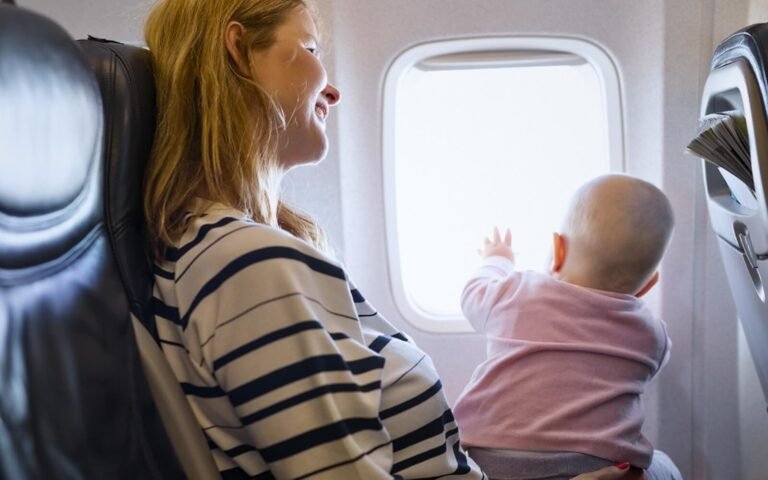
On the plane, the timing of a feed matters as much as the contents. The American Academy of Pediatrics’ flying-with-baby guidance on HealthyChildren.org suggests offering the breast or a bottle during takeoff and landing, because swallowing helps protect little ears from cabin-pressure changes. I board with one bottle ready to go and the rest packed. For the full carry-on strategy, see my guide to flying with a baby.
Road trips are gentler on feeding logistics but harder on timing. I never prepare bottles in advance to sit warm in the car; instead the cooler holds chilled milk or water, the dispenser holds pre-measured powder, and we mix fresh at each stop. Feeding happens when the car is parked — never with the baby in a moving vehicle’s car seat, where propped bottles are a choking risk. My full routine is in our road trip with a baby guide.
At Your Destination
The first thing I do at a hotel is confirm the refrigerator works and set it up for milk storage. The second is figure out bottle washing: I pack a travel bottle brush and a small bottle of dish soap, wash in hot soapy water, and air-dry on a clean towel — the same steps in my guide on how to clean a baby bottle. If your baby is in the higher-risk group (under 2 months, premature, or immunocompromised), sanitizing feeding items daily matters even more, and it is worth planning how you will do that before you leave home.
When to Talk With Your Pediatrician
Before any trip, a quick conversation with your pediatrician is worth the call, especially if your baby is younger than 2 months, was born prematurely, has a weakened immune system, takes any medication, or has a history of feeding difficulties. Ask how you should handle formula preparation on the road for your specific baby, what to do if your baby refuses bottles while traveling, and what signs of dehydration or illness should prompt local medical care. This article shares general guidance from the CDC and the American Academy of Pediatrics — it is not medical advice or a diagnosis, and your pediatrician’s instructions for your baby always come first.
Summary
Traveling with baby formula and breast milk comes down to three habits: pick the right format for the trip (powder plus safe water for flexibility, sterile ready-to-feed for uncertainty), respect the clock (2 hours for prepared formula, 1 hour once feeding starts, 24 hours for milk in a cooler with frozen ice packs), and use your rights at security (feeding liquids are exempt from the 3.4-ounce rule). Add a cooler bag, a labeled dispenser of powder, and a hotel fridge request, and feeding away from home becomes one of the easier parts of the trip. When anything about your baby’s feeding or health is in doubt, check with your pediatrician before you travel.
Frequently Asked Questions
Can I bring more than three point four ounces of formula or breast milk through airport security?
Yes. In the United States, formula, breast milk, and related child feeding items are exempt from the liquids rule that limits other liquids to 3.4 ounces (100 mL) each, according to the CDC’s summary of Transportation Security Administration policy. Tell the officer at the start of screening, separate the items from your other liquids, and allow extra time. You may carry expressed milk even when your baby is not traveling with you.
How long does prepared formula last while traveling?
The CDC’s rule does not change on the road: use prepared formula within 2 hours of preparation, and within 1 hour from when the feeding begins. If the bottle has not been started within 2 hours, refrigerate it immediately and use it within 24 hours. Formula left in the bottle after a feeding should be thrown out. When you cannot guarantee refrigeration, mixing each bottle fresh from powder and safe water — or using sterile ready-to-feed bottles — is the safer pattern.
Can I refreeze breast milk that thawed in the cooler?
Only if it has not fully thawed. The CDC says frozen milk that still contains ice crystals when you reach your destination can be refrozen. Milk that has thawed completely should be kept cold and used within 24 hours from when it finished thawing, and previously frozen milk should never be refrozen once fully thawed.
Does airport x-ray screening harm breast milk or formula?
No. The CDC notes that expressed milk and feeding accessories are typically screened by x-ray and that x-rayed milk is safe to feed your child. If you would rather your milk not be x-rayed or opened, you can tell the officer, and the liquid will be cleared through additional screening steps instead.
Should I buy formula at my destination instead of packing it?
I pack enough for the full trip plus a buffer whenever I can. Formula brands and preparation instructions vary by country and even by store, switching formulas abruptly can unsettle some babies’ stomachs, and your usual brand may simply be unavailable. If you do plan to buy at your destination, check availability ahead of time, bring enough for at least the first day or two, and never use formula past the use-by date on the container. Ask your pediatrician before any planned formula switch.



One Comment